
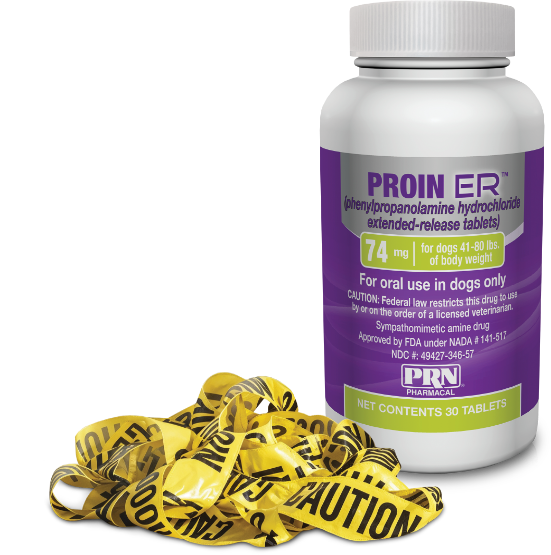
PROIN ER™ gets dogs back where they belong.
PROIN ER (phenylpropanolamine hydrochloride extended-release tablets) is the only once-a-day, FDA-approved medication for the control of canine UI due to urethral sphincter hypotonus.
The convenience of once-daily dosing can improve pet owner compliance and make treatment more sustainable1. Plus, the small size of PROIN ER makes medication time easier for dogs and pet owners.
Easy to prescribe weight-band dosing
1 Barter LS et al. 2015; Adams VJ et al. J Small Anim Pract. 2005.
Clinically proven to be safe and effective2
In a multi-centered clinical field study, PROIN ER (2.8 mg/kg/day dose) was administered to 104 client-owned dogs with UI. Study participants were previously treated with a baseline therapy of twice-daily PROIN® Chewable Tablets (phenylpropanolamine hydrochloride).
The study demonstrated that treatment with PROIN ER administered orally once a day was safe and effective for the control of UI due to urethral sphincter hypotonus. PROIN ER was also found to be comparable to twice-daily PROIN® Chewable Tablets in reducing UI occurrences.
Key Findings
Consistent Response:
99.1% of owners observed maintained or improved continence control within 28 days of PROIN ER administration.
High Acceptance From Pet:
82.2% of patients voluntarily consumed a dose of PROIN ER when given with or without a small amount of food.
The PROIN ER™ advantage

Treatment Compliance
Simple once-daily dosing helps clients adhere to treatment, which can improve patient outcomes.1

Cost-Effective
Lower cost of treatment can make quality care more accessible and offer long-term affordability for pet owners.

Consistent Control
Patented extended-release technology provides controlled delivery that ensures steady absorption, reducing the occurrence of UI episodes.

Broad Tolerability
Formulated with hydrolyzed protein, making it an alternative for dogs with dietary sensitivities.*
1 Barter LS et al. 2015; Adams VJ et al. J Small Anim Pract. 2005.
*While hydrolyzed proteins reduce the risk of immunologic reactivity, individual sensitivities may still occur.
What is urinary incontinence?
Urinary incontinence (UI) occurs when dogs involuntarily lose urine due to lack of bladder control. It typically starts 2-4 years after a female dog is spayed, but can begin sooner or later. Medium to large breed dogs are commonly affected, but small breed dogs may also develop urinary incontinence.1,2
Signs of urinary incontinence (UI):
• Dripping, leaking urine • Wet spots where dog sleeps • Excessive licking of genitals • Red, irritated skin in the genital area • Inappropriate urination indoors
2Holt PE, Thrusfield MV. Association in bitches between breed, size, neutering and docking, and acquired urinary incontinence due to incompetence of the urethral sphincter mechanism. Vet Rec 1993;133:177–180.

Is PROIN ER right for my dog?
Since urinary incontinence may be new to you, here’s a helpful list of questions your veterinarian may ask to help in the diagnosis (along with performing tests like urine culture, blood tests, abdominal imaging, or ultrasound). Answering these questions before the first appointment could be the first step in managing your dog’s leaking issues.